
Kauaʻi is small enough that no home base is truly far from anything — and distinctive enough that where you sleep shapes how the whole trip feels. The North Shore and South Shore occupy different worlds on the same small island — different weather, different beaches, different lodging, and a different pace of life.
Neither side is universally better. The right choice comes down to your itinerary, the season you're visiting, what you plan to do, and the atmosphere you want at the end of each day. Here's how to think it through.
Current Travel Note — September 2026: Kauaʻi continues to recover from Hurricane Lowell, and conditions are still changing. As of late September 2026, Hāʻena State Park and nearly all other state parks, trails, and DLNR lands on Kauaʻi remain closed, and the Wainiha and Hāʻena areas are open to local traffic only; the County beach parks at Hāʻena, Hanamāʻulu, Poʻipū, and Salt Pond also remain closed. Verify current access, park, trail, road, and ocean conditions with official sources before you go — we're tracking the latest in our Hurricane Lowell Kauaʻi travel update.
Quick Answer: North Shore or South Shore?
As a starting point:
- Lean North Shore (Princeville or Hanalei) if your trip is about lush scenery, hiking, a slower small-town pace, and time on the island's most dramatic coastline — keeping in mind that north-facing shores typically see larger surf in winter, while summer often brings calmer conditions, though they still vary.
- Lean South Shore (Poʻipū or Kōloa) if you want the island's generally drier weather, resort amenities, walkable dining, and convenient access to Waimea Canyon and the west side — bearing in mind that south-facing shores can pick up larger swells in summer.
- Consider a split stay for trips of a week or more, or whenever your itinerary pulls hard in both directions.
Season shapes the ocean more than most visitors expect, and conditions change daily on both shores — always check current conditions before you swim. More on that below.
Kauaʻi's North Shore at a Glance
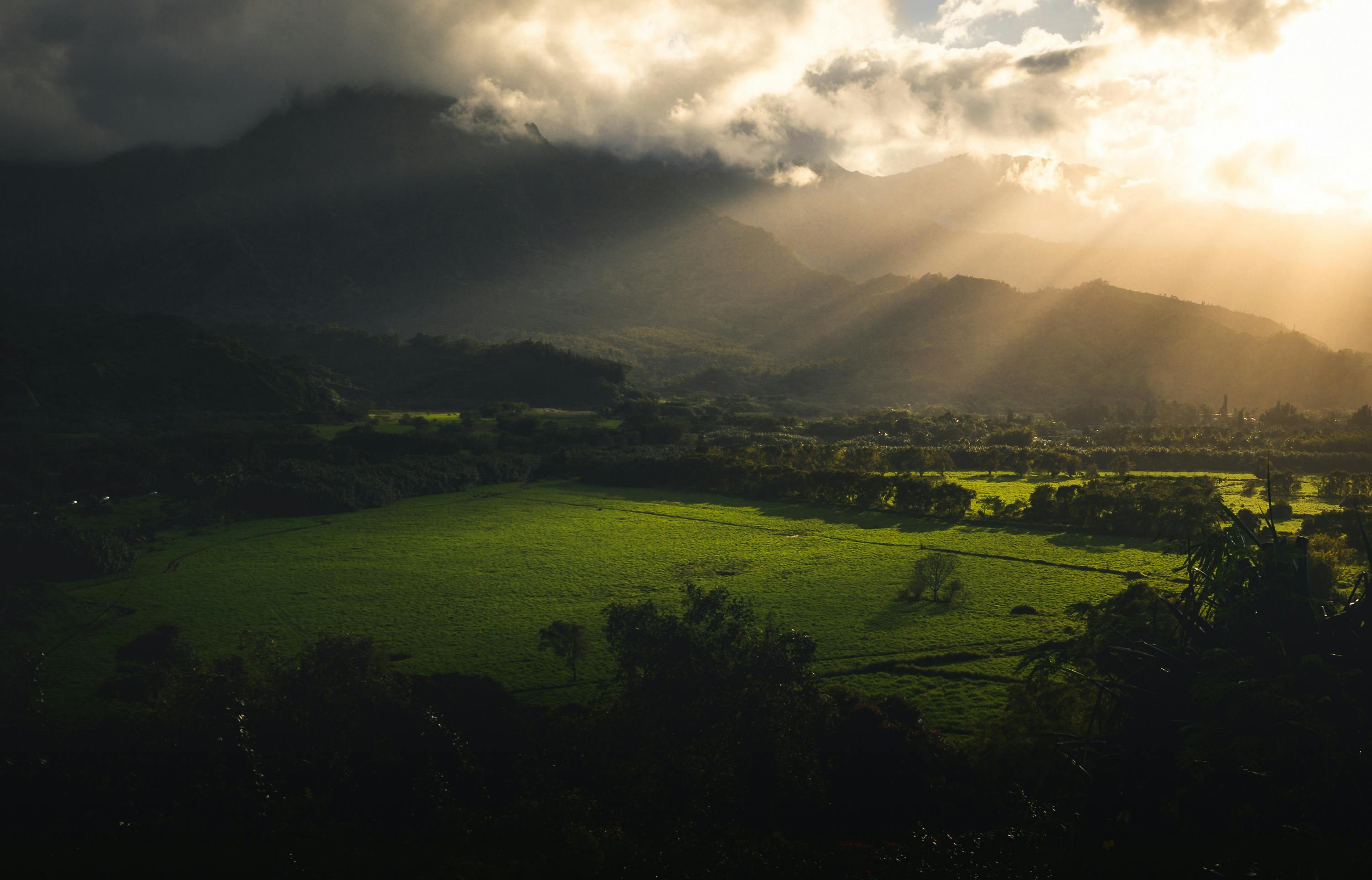
- Setting: Emerald ridges, taro fields, and mountains rising straight off the coast — some of the most striking scenery in Hawaiʻi.
- Base towns: Princeville, a resort and condo area on the bluffs above Hanalei Bay, and Hanalei town, small and walkable, at sea level.
- Weather: The island's generally wetter side — and its most vividly green. The North Shore receives more rainfall, which contributes to that lush landscape; conditions can vary considerably by day and location.
- Ocean: Dramatic and seasonal — often calm and inviting in summer, powerful and hazardous in winter.
- Lodging: One flagship resort, condo-style properties, and a deep supply of vacation rentals.
- Best for: Hiking, kayaking, photography, slow mornings, and travelers who prize beauty over convenience.
What It's Like Staying in Princeville & Hanalei
Princeville sits on the cliffs on the north side of Hanalei Bay. It's the North Shore's main resort pocket — a full-service luxury resort, golf, condo complexes, and a central shopping plaza, all with views that stop conversation. Everything in Hanalei town is about ten minutes down the hill.
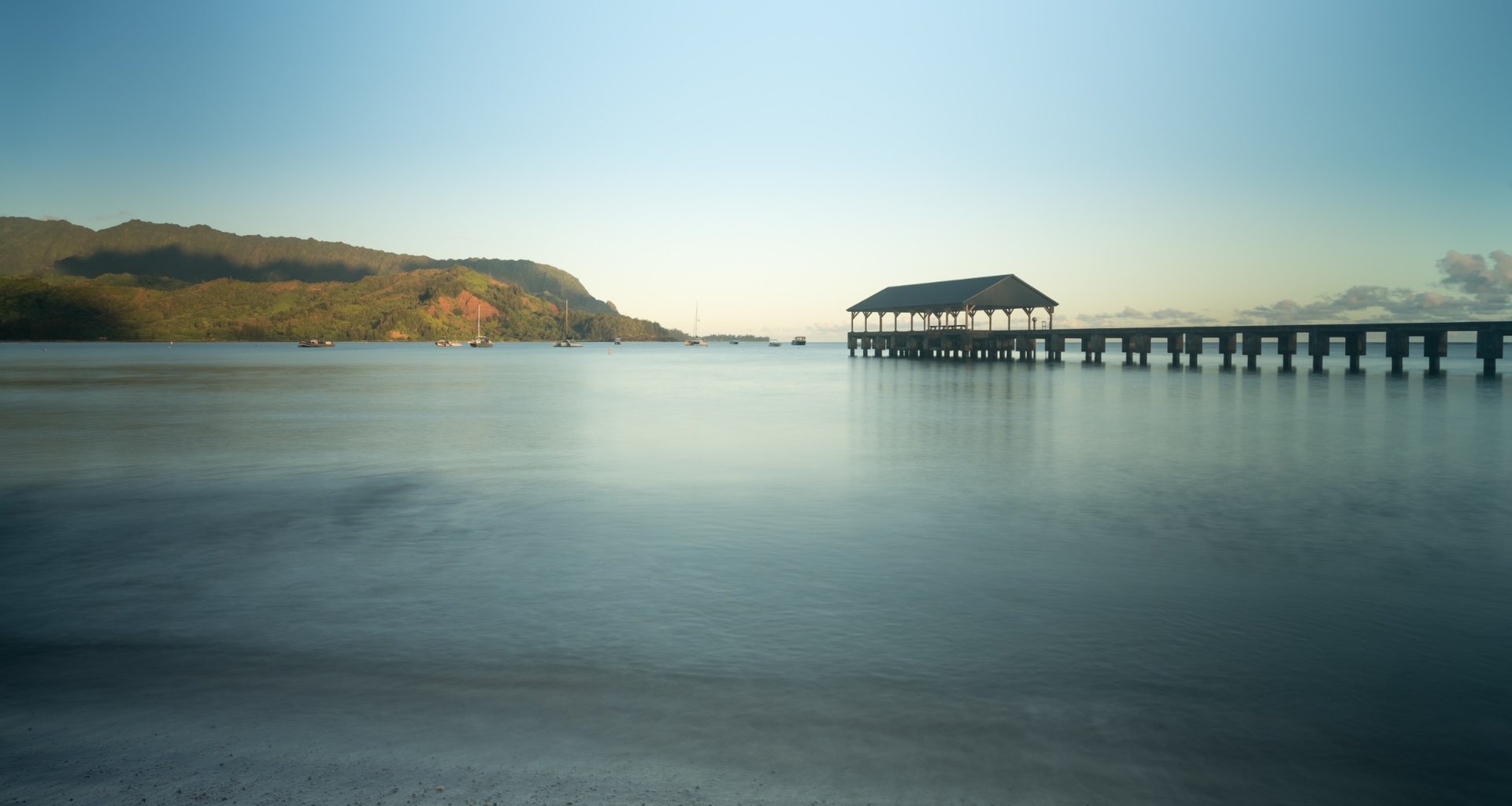
Hanalei town is the opposite of a resort strip: a walkable village of surf shops, plate-lunch counters, coffee stops, and small inns and vacation rentals, arranged along the curve of the bay. Hanalei Bay is lifeguarded and, in summer, often glassy — a beautiful two-mile crescent of sand backed by Kauaʻi's mountains. Evenings tend to end at the pier.
Kīlauea, a little further east, offers a quieter small-town feel and a handful of rentals, near the historic lighthouse at Kīlauea Point. And Hāʻena, beyond Hanalei at the literal end of the road, is less a base than a destination: Hāʻena State Park, the protected lagoon at Keʻe, and the trailhead of the famed Kalalau Trail along the Nāpali Coast. Non-resident entry to Hāʻena requires advance reservations through gohaena.com — book well ahead, whenever the park is open.
Hoku Local Note: Some of the best Hanalei mornings are the wettest ones — the valley fills with mist and light at the same time. Pack a light rain layer and don't let a passing shower change your plans.
Kauaʻi's South Shore at a Glance
- Setting: Sun-drenched resort shoreline, beach parks, and historic plantation country just inland.
- Base towns: Poʻipū, the island's main resort and beach hub, and Kōloa, a quiet historic town a few minutes up the hill.
- Weather: The generally drier side of the island — often the sunnier choice in winter.
- Ocean: A lifeguarded, partly protected swimming area at Poʻipū Beach, with ocean conditions that still vary daily; south-facing shores can pick up larger surf in summer.
- Lodging: The island's largest cluster of full-service resorts, plus condos and rentals.
- Best for: Resort comfort, families, golf, sun-seekers, and west-side exploring.
What It's Like Staying in Poʻipū & Kōloa
Poʻipū is one of Kauaʻi's primary resort areas, with beachfront hotels, restaurants, and boutique shopping relatively close together along the shoreline road. Poʻipū Beach Park has lifeguards and a naturally protected swimming area that can make it a family favorite — though as anywhere on Kauaʻi, ocean conditions deserve a daily check before you swim. A coastal path continues east toward Shipwreck Beach and the lava fields of the Māhāʻulepū Heritage Trail.
Kōloa sits a few minutes inland: a small, historic plantation town with old wooden buildings, a general store, local eateries, and a slower residential rhythm. Staying here puts you slightly away from the resort bustle while keeping the beaches close.
The South Shore is also the practical base for the rest of southern and western Kauaʻi. Waimea Canyon and Kōkeʻe are roughly 45–60 minutes away, the natural wonder of Spouting Horn is down the road, Makauwahi Cave Reserve is nearby — and Nā Pali Coast boat tours depart from Port Allen, about 15–20 minutes west.
North Shore vs. South Shore: Side-by-Side Comparison
| North Shore | South Shore | |
|---|---|---|
| Atmosphere | Lush, rural, unhurried | Sunny, resort-oriented, convenient |
| Base towns | Princeville, Hanalei | Poʻipū, Kōloa |
| Lodging style | One flagship resort, condos, many rentals | The island's main resort cluster, condos, rentals |
| Weather tendency | Greener, generally more rain | Generally drier, often sunnier |
| Ocean in summer | Often calmer; varies daily | Varies daily; occasional summer swells |
| Ocean in winter | Powerful surf — swimming often not advisable | Usually gentler for swimming |
| Drive from Līhuʻe Airport | About 50–65 minutes | About 25 minutes |
| Signature sights | Hanalei Bay, Hāʻena, Kalalau trailhead | Waimea Canyon access, Spouting Horn, Māhāʻulepū |
| Best fit | Scenery, hiking, quiet | Comfort, families, west-side touring |
Still torn? Seeing your own days mapped out usually settles it — sketch your itinerary with Hoku Luxe, and the right base tends to announce itself.
Which Side Is Better for Beaches?
Both shores have excellent beaches. What differs is the season.
On the North Shore, Hanalei Bay is the centerpiece — two miles of sand backed by mountains, lifeguarded, and often calm and swimmable from late spring through early fall. Tunnels (Makua) and Keʻe add snorkeling and a protected lagoon. But in winter, roughly November through April, large north swells arrive, and the same beaches can be hazardous for swimming for days at a time.
On the South Shore, Poʻipū Beach Park is the anchor — lifeguarded, with a naturally sheltered swimming area, and generally reliable when conditions are normal. Shipwreck Beach is a longer, more exposed stretch better suited to walks and experienced bodysurfers. In summer, south-facing shores can pick up their share of swell, so conditions still deserve a daily check.
Neither shore should be treated as unconditionally calm. Ocean conditions change daily and beach to beach: check current conditions before you swim, choose lifeguarded beaches whenever possible, and when in doubt, stay out of the water and enjoy the sand.
Which Side Is Better for Weather?
Kauaʻi's weather is shaped by trade winds and the island's mountainous interior — which is why the two shores feel like different climates. Hanalei averages considerably more rain each year than Poʻipū, and that rain is precisely why the North Shore is so green.
A few honest qualifiers: the North Shore is not a rain forest to endure — rainfall varies considerably by day and season, from quick showers to steady stretches, with bright days mixed in. The South Shore is not a sunshine guarantee — it simply tends toward drier, clearer weather, especially in winter. Microclimates mean you can drive from sunshine to mist and back within an hour.
Hoku Local Note: The forecast matters less here than flexibility. Plan mornings outdoors, keep a rain layer in the car, and let a passing shower become a coffee stop rather than a canceled plan.
Which Side Is Better for Activities & Sightseeing?
North Shore itineraries tend to fill with: hiking toward Hanakapiʻai and the Nāpali Coast from the Hāʻena trailhead, kayaking the Hanalei River, photographing the taro fields at Hanalei Valley Lookout, and slow afternoons in Hanalei town. It's the side for travelers who want the island's wild beauty up close, every day.
South Shore itineraries pull wider: Nāpali Coast boat tours from Port Allen, snorkeling and coastal walks along Māhāʻulepū, Makauwahi Cave Reserve, golf, and — the big one — day trips to Waimea Canyon and Kōkeʻe, which are dramatically more convenient from the south.
If you're still building your list, browse Kauaʻi's attractions and experiences in our Explore section and see which side of the island your must-dos cluster on — that's usually the honest answer to where you should stay.
Which Side Is Better for Families?
For many families, the South Shore simplifies the logistics: a shorter drive from the airport, a lifeguarded beach with a sheltered swimming area, walkable restaurants, and resorts built for downtime. Poʻipū can let a family split up gracefully — one parent at the pool, one at the beach, everyone within a few minutes of the room.
The North Shore can suit nature-first families, particularly in summer: gentle mornings on Hanalei Bay, wide sand for kids, and a small-town pace that feels made for wandering. The trade-offs to weigh are the longer arrival drive and the need to plan around weather and winter surf.
Which Side Is Better for Couples?
It depends on which version of together you're after. The North Shore is romantic in a wild way — mist on the mountains, a two-person table in Hanalei, sunsets from the pier, and hikes that feel like the two of you against the island. The South Shore is romantic in an easy way — spa afternoons, fine dining steps from the sand, and logistics that never interrupt the mood.
Couples who want seclusion and drama lean north; couples who want comfort and indulgence lean south. Both are right.
What About Driving Around Kauaʻi?
One geography lesson matters more than any drive time: Kauaʻi's roads do not make a loop. The Nāpali Coast closes the northwest corner, so every route is effectively a spur — out along one coast and back the same way. A map distance can be misleading; two sights that look close may sit at the ends of different spurs.
That's why grouping matters. A well-planned Kauaʻi day stays in one region — Hanalei Bay, Hāʻena, and Kīlauea together, or Waimea Canyon, Kōkeʻe, and Hanapēpē together — rather than ping-ponging across the island.
Some approximate drive times in normal traffic (add slack at peak hours — the highway through Kapaʻa slows considerably, roughly 7–9 a.m. and 3–5 p.m.):
- Līhuʻe Airport to Poʻipū: about 25 minutes
- Līhuʻe Airport to Princeville: about 50–60 minutes
- Līhuʻe Airport to Hanalei: about 55–65 minutes
- Poʻipū to Hanalei: about 75–80 minutes
- Poʻipū to Waimea Canyon: about 45–60 minutes
- Princeville to Waimea Canyon: about 75–90 minutes
Hoku Local Note: Distance on Kauaʻi is measured in corners, not miles. Plan by region, and the island shrinks; plan by map pins, and it doesn't.
Should You Split Your Stay Between North & South?
Sometimes the honest answer is both. A split stay trades the ease of unpacking once for the chance to wake up near a different set of mornings — and on an island of spurs, it saves real hours of backtracking.
A gentle framework, not a rule:
- 3 days: One home base. Switching eats a day you don't have.
- 5 days: Generally still one base. Day-trip the other shore once and keep the trip simple.
- 7 days: A split becomes worth considering — three or four nights south, three north, with the order set by your priorities.
- 10 days: A split can make considerable sense, giving each shore its own unhurried chapter plus time for the west and east sides.
If you split, keep it to one switch, pack a day bag for the moving morning, and check minimum-stay policies at vacation rentals before you commit to the plan.
Where to Stay for 3, 5, 7 or 10 Days
Trip length shapes the decision as much as destination. (Our guide to how many days you need on Kauaʻi covers what's realistic to see in each window.)
- 3 days: One base, chosen by your single top priority — scenery and hiking point north; sun, sand, and comfort point south. Save the far shore for the next trip.
- 5 days: One base. Many visitors pick the South Shore for balance and day-trip the North Shore, or the reverse if hiking and Hanalei are the heart of the trip.
- 7 days: Either one base explored slowly or a split — a few nights in Poʻipū followed by Hanalei lets the trip quiet down as it goes; the reverse ends on a resort note.
- 10 days: Split the stay, and let the extra days absorb the west side — Waimea Canyon, Kōkeʻe, and Polihale — without re-crossing the island.
Final Recommendation Framework
- Map your must-dos by region. List everything you actually want to do, then count what sits north versus south. The heavier list should anchor the trip.
- Weigh the season. Swimming matters in winter? Lean south. Visiting May through September? Either shore works, so let atmosphere decide.
- Choose your atmosphere. Quiet, green, and unhurried — or sunny, full-service, and walkable. There's no wrong answer, only a different trip.
- Let length decide the split. Three to five days, one base. Seven or more, consider waking up on both shores.
- Plan by geography, not mileage. Whichever side you choose, group your days by region and the driving takes care of itself.
And if the tally keeps coming up even, remember that the East Side — Kapaʻa and Līhuʻe — sits between the two shores and can work as a neutral middle ground.
Plan Your Kauaʻi Trip with Hoku Luxe
Hoku Luxe helps you organize activities geographically and build a more thoughtful Kauaʻi itinerary—so you can spend less time backtracking and more time experiencing the island.